Becoming a dad measurably changes your brain chemistry, hormone levels, and neural wiring — and the research proves it. Testosterone drops, oxytocin rises, and the paternal brain literally grows new connections tied to empathy and protection. These changes aren't weakness — they're your biology upgrading you for the job.
I remember standing in the hospital hallway, my daughter finally asleep against my chest, and thinking: something is fundamentally different about me right now. It wasn't exhaustion talking — it was something deeper, something I couldn't name at the time. Turns out, that feeling had a biological explanation, and the science behind what fatherhood does to a man's brain is one of the most compelling things I've read in years.
Here's the deal: the moment you become an actively involved father, your endocrine system gets a new set of orders. The most studied change is a significant drop in testosterone — not a small dip, but an average reduction of 26–34% in new dads who are hands-on with caregiving. A landmark study published in the Proceedings of the National Academy of Sciences tracked Filipino men across a four-year period and found that the fathers who spent the most time in direct childcare had the steepest testosterone drops.
Before you panic, understand what this actually means. Lower testosterone in the context of fatherhood doesn't mean you're becoming less of a man. It means your biology is redirecting your drive — from competition and status-seeking toward protection and provision. You're not losing an edge; you're sharpening a different one. If your testosterone levels are in-fact low there are some bases you should make sure to cover like overall health and or basic nutrient and vitamin levels. For example, Vitamin D is a big one and the one with evidence behind it. Here's the one I take:
On the flip side, oxytocin — often called the bonding hormone — surges in new dads during physical play, eye contact, and skin-to-skin contact with their baby. And here's what most people don't know: the oxytocin release pattern in fathers is actually different from mothers. Moms tend to spike during nurturing behaviors like feeding and soothing. Dads spike hardest during stimulating play — roughhousing, tossing the baby in the air, exploration activities. Your body is literally designed to bond through play.
The practical takeaway here is simple. Don't outsource the hands-on stuff. Every diaper change, every bedtime, every wrestling match on the living room floor is feeding a biological feedback loop that makes you a more bonded, more attuned father. The science doesn't lie — and neither does your gut when you're holding your kid.
Real talk: your brain is not fixed hardware. It's more like living tissue that responds to what you repeatedly do, feel, and prioritize — and fatherhood is one of the most powerful rewiring events a man's brain can experience.
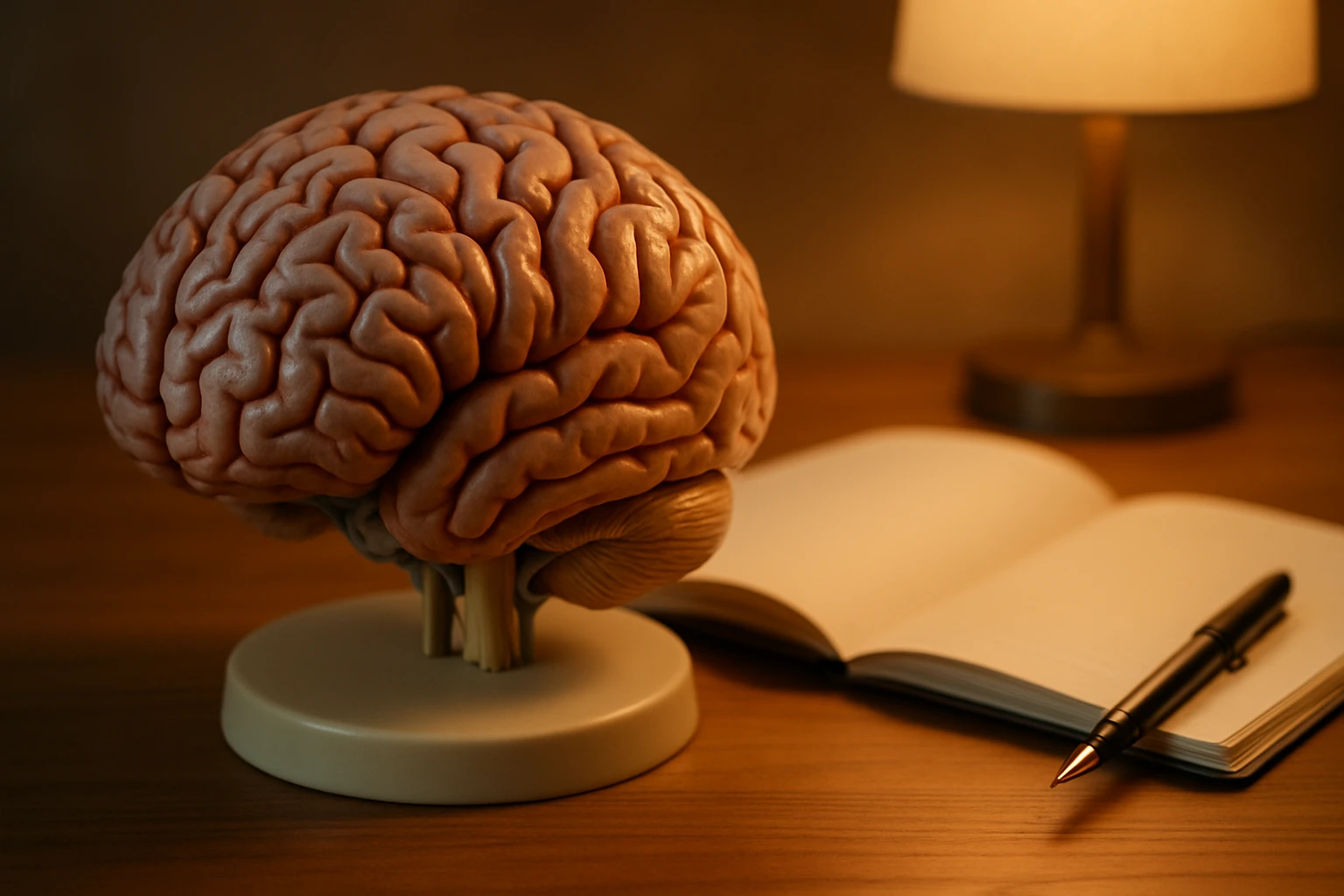
Neuroplasticity is the brain's ability to form new neural connections and reorganize existing ones in response to experience. Fatherhood triggers this process aggressively. Research published in the journal Cerebral Cortex found that new fathers showed significant increases in gray matter volume in several key brain regions — including the hypothalamus, amygdala, and prefrontal cortex — from the time their baby was born to when the child was around four months old. These aren't subtle changes. These are structural, measurable shifts in brain architecture.
The hypothalamus regulates your motivation and caregiving drive. The amygdala handles threat detection and emotional processing. The prefrontal cortex governs decision-making, impulse control, and planning. In other words, fatherhood is literally building out the regions of your brain most responsible for being a good protector, a calm decision-maker, and an emotionally present parent.
Here's the kicker: the degree of change correlates directly with how involved you are. Dads who were more active in caregiving showed greater gray matter increases than those who were less involved. Your brain is responding to the reps you're putting in. If you want the full upgrade, you have to show up for the work — not just the highlights.
The takeaway is this: every time you choose presence over distraction, you are literally building a better brain. That's not motivational poster stuff — that's neuroscience. You can't rush gray matter, but you can give your brain the raw materials it needs. Omega-3s are the building blocks — this is the one I've used for months:
Studies comparing brain scans of new dads versus non-fathers are some of the most eye-opening research in modern developmental psychology. And for years, almost all of this research focused exclusively on mothers. The good news: that gap is closing fast.
A 2014 study out of Yale University used fMRI imaging to compare brain activity in new fathers and non-fathers while they looked at photos of their own children versus unfamiliar children. The results were striking. New fathers showed significantly heightened activation in the brain's reward circuitry — particularly the dopamine-driven nucleus accumbens — when viewing their own child's face. Non-fathers showed no comparable response. Your baby's face is literally triggering your brain's reward system the same way meaningful achievement does.
A separate study from Bar-Ilan University in Israel scanned the brains of primary-caregiving fathers — men who were the main caregiver while their partner worked — and found that their brain activity patterns closely mirrored those of primary-caregiving mothers. The parental brain, it turns out, is less about biology and more about behavior. Do the caregiving, and your brain adapts to match.
What this means practically: the instinct you feel when your kid cries in the night, the hyperawareness you have in a parking lot, the way you scan a room for hazards before your kid even enters it — that's not anxiety. That's your upgraded threat-detection hardware running exactly as designed. Trust it. Develop it. The brain scans confirm it's real.
I'll be honest — I was not the most emotionally perceptive man before my daughter arrived. I ran a construction company. I drove OTR. I was wired for problems, solutions, and getting the job done. Feelings were something you processed on your own time, if at all.
Fatherhood cracked that open. And it turns out, it's supposed to.
Research shows that new fathers experience measurable increases in empathic accuracy — the ability to correctly read and respond to another person's emotional state. This isn't just a soft skill developing through practice, though practice matters too. The hormonal and neurological changes happening in your brain are physically increasing your capacity for emotional attunement. The amygdala growth documented in paternal brain studies directly enhances emotional processing. The oxytocin surges during caregiving sharpen your sensitivity to nonverbal cues.
Here's what that looks like in real life. You start reading your baby's different cries before you consciously know how you know the difference. You become more attuned to tension in your home, more aware of your partner's emotional state, more responsive to the unspoken needs of the people around you. These aren't accidents. They're features.
The research also shows that fathers who develop stronger emotional attunement in the first year raise children with better emotional regulation, stronger social skills, and higher resilience. Your empathy isn't just good for you — it's protective armor for your kids. That's the kind of return on investment worth taking seriously.
Practical takeaway: lean into the discomfort of emotional presence. Put the phone down. Make eye contact. Ask how your kid is actually doing and wait for the real answer. Your brain is already building the capacity — you just have to use it. A sharper threat-detector also makes it harder to wind down. Magnesium glycinate is what's actually helped me sleep through the noise:
Nothing about Dad Brain is accidental. Every hormonal shift, every neural rewiring, every surge of oxytocin during playtime — it all points to an evolutionary design with a clear purpose: produce men who are fiercely committed to the survival and flourishing of their offspring.
From an evolutionary standpoint, human children are uniquely helpless for an unusually long time compared to other species. A human baby requires years of intensive investment before it can function independently. That's not a flaw — it's the feature that allowed human intelligence to develop. But it also meant that human fathers who stayed, bonded, and invested produced far more surviving offspring than those who didn't. Over hundreds of thousands of years, biology selected for the Dad Brain.
The testosterone drop reduces risk-taking and status competition — behaviors that might get a lone man ahead but get a father killed or absent when his family needs him most. The oxytocin surge creates genuine emotional reward from caregiving, making you want to be present rather than forcing yourself to be. The threat-detection upgrades in the amygdala make you hyperaware of danger to your children in a way you simply weren't before they existed.
The biology is there to support you, but it responds to action. The evolutionary design of Dad Brain assumes you're going to show up, engage, and do the work. The upgrades are available. Whether you access them is on you.
Bottom line: you were built for this. Not in a soft, motivational-speech way — in a hard-wired, millions-of-years-of-selection-pressure way. The instincts you feel as a father are ancient and purposeful. Honor them.
Here's something the parenting conversation almost never talks about: Dad Brain doesn't peak in the newborn phase and then level off. It compounds. The neurological and hormonal changes that begin when your first child is born continue to develop, deepen, and strengthen as you accumulate years of active fatherhood.
Longitudinal research tracking fathers over multiple years shows that the emotional attunement, threat-detection sensitivity, and empathic accuracy developed in early fatherhood continue to grow with sustained involvement. Fathers of multiple children consistently score higher on measures of parental sensitivity than first-time dads — not just because they have more experience, but because their brains have had more time to reinforce and expand the neural pathways built during early caregiving.
Think of it like a physical skill. The first time you did a complex job — whether that was framing a wall, backing a trailer, or navigating a difficult conversation — it took everything you had. Do it a thousand times and it becomes second nature. The brain literally myelinates the pathways you use most, making them faster and more efficient. Fatherhood works the same way.
This also means the investment you make right now — in presence, in hands-on caregiving, in emotional engagement — has a compounding return. You're not just being a good dad today. You're building the hardware that makes you a better dad next year, and the year after that, and when your kid is a teenager and needs you to be someone they can actually talk to.
Sometimes, good enough is good enough — but not here. The reps you put in now are building something that pays dividends for the rest of your life as a father. That's worth showing up for.

Here's where I want to land the plane, because the science is only useful if it changes how you see yourself.
A lot of men walk into fatherhood carrying the old cultural script: stay strong, stay stoic, provide financially, don't get too soft. And there's real value in strength and provision — don't let anyone tell you otherwise. But the research on Dad Brain tells us something important: the emotional changes fatherhood triggers are not a compromise of your masculinity. They are an expansion of it.
The man who can read a room, regulate his own emotions, respond to his child's needs with calm competence, and remain a steady presence under pressure — that man is not soft. He's capable in a way that actually matters. The neuroscience confirms what the best fathers throughout history already knew: being emotionally present and being genuinely strong are not opposites.
I became a dad for the first time the same year I lost my own father. That timing hit different. It forced me to think hard about what kind of father I wanted to be — not just what I wanted to provide, but who I wanted to be in the room. The Dad Brain research gave me a framework for understanding that the feelings I was experiencing weren't weakness. They were the system coming online.
Your identity doesn't shrink when you become a father. It grows. The science backs that up. Own it.
The Dad Brain effect is not a metaphor. It is a measurable, documented, biological reality — and it is working in your favor right now, whether you knew about it or not. Your hormones shifted to make you a better protector. Your brain grew new architecture to make you more empathetic and alert. Your reward system rewired itself to make your child's face the most compelling thing you've ever seen. That's not weakness dressed up in science. That's your biology doing exactly what it was designed to do.
The specific next step is straightforward: be present. Not perfectly, not with some elaborate plan — just present. Put the phone in the other room. Get on the floor. Roughhouse. Read the same book for the fourteenth time this week. Every one of those moments is a rep that deepens the neural pathways, compounds the oxytocin feedback loop, and builds the brain of a father who gets better at this every single year. You've got the hardware. Now run the reps.
FAQ
Ask the Boss
Got a follow-up on this one? Ask the Boss.
Liked this guide?
One email a week — only when there's something new. No spam. No sponsors.
Unsubscribe anytime.
Reviews
Guides

The Science-Backed Framework for Building Identity-Based Habits
Forget willpower — here's the identity-based habit framework, backed by real research, that actually changes who you are.

Razor Rash? Here's Our #1 Shaving Hack for Men.
Sink shaving is costing you time and wrecking your neck. Here's the one switch that kills razor rash and buys back 5–8 minutes every morning.

Faith, Fatherhood & the Man You Should Become First
Sustainable fatherhood isn't built on behavior alone — it's built on identity. Here's why the work on yourself had to come first.
Check out the upcoming items on our bench list
— Made by Boss Daddy